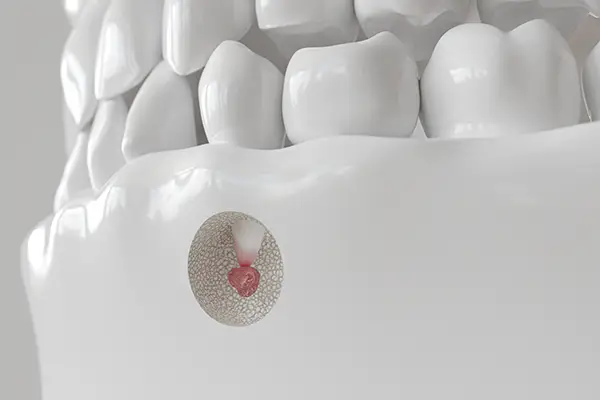
What Is An Apicoectomy And Why Would I Need This Procedure?
Posted on 9/1/2026 by Premier Dental Center
Think of your tooth like a tree. The part you see above the gum line is like the trunk and branches, and the roots are the part that anchors it firmly in your jawbone. Inside those roots is a canal filled with soft tissue called the pulp, which contains nerves, blood vessels, and connective tissue. Sometimes, this pulp can become infected, leading to a need for a root canal. But what happens when a standard root canal isn't enough? That's where an apicoectomy comes in.
What is an Apicoectomy?
An apicoectomy is a surgical procedure performed to remove the very tip of a tooth's root (the "apex") and clean any infected tissue around it. The procedure is often needed when a root canal treatment has failed or cannot be performed successfully. It's essentially a "second chance" to save a tooth that might otherwise need to be extracted.
Why Would I Need an Apicoectomy?
Several reasons might lead your dentist or endodontist (a root canal specialist) to recommend an apicoectomy. These reasons usually revolve around persistent infection or inflammation in the bone surrounding the root tip, even after a root canal has been done.
•
Failed Root Canal: Sometimes, even with the best root canal treatment, infection can persist. This might be due to complex root canal anatomy that makes it difficult to clean thoroughly, or because the canal has become re-infected.
•
Fractured Root: A fracture in the root can allow bacteria to enter and cause infection. If the fracture is near the tip of the root, an apicoectomy might be the best option.
•
Calcium Deposits: In some cases, calcium deposits can block the root canal, preventing proper cleaning and sealing during a root canal treatment.
•
Trauma to the Tooth: Injury to a tooth can sometimes lead to the development of an abscess or infection at the root tip.
•
Anatomical Obstacles: Occasionally, anatomical variations, such as a curved root or a very narrow canal, can make it difficult to complete a traditional root canal.
What to Expect During the Procedure
The procedure is usually performed by an endodontist. Local anesthetic is used to numb the area completely, so you shouldn't feel any pain during the surgery. A small incision is made in the gum tissue to expose the bone and root tip. The infected tissue is removed, along with a small portion of the root tip. A filling is then placed to seal the end of the root and prevent future infection. The gum tissue is stitched back into place.
After the Procedure
Following an apicoectomy, you can expect some mild discomfort, swelling, and bruising. Your dentist or endodontist will likely prescribe pain medication to manage any discomfort. You'll also receive instructions on how to care for the surgical site, including gentle rinsing with an antiseptic mouthwash. It's important to follow these instructions carefully to promote healing and prevent infection. A follow-up appointment will be scheduled to monitor your progress.
Is an Apicoectomy Right for Me?
The decision to have an apicoectomy is made after a thorough evaluation by your dentist or endodontist. This evaluation will include X-rays and a clinical examination to determine the cause of the persistent infection and assess the overall health of the tooth and surrounding bone. An apicoectomy is generally considered a successful procedure for saving teeth that would otherwise need to be extracted. By understanding the procedure and the reasons why it might be necessary, you can feel more confident in making informed decisions about your dental health.
About | Premier Dental Center - Bells, Jackson, & Milan, TN Learn more about our dentists, team, and the technology we use at our Bells, Jackson & Milan, TN locations! Call today to schedule with us! Premier Dental, 80 Exeter Rd, Jackson, TN 38305 / 731-300-3000 / premdent.com / 9/1/2026 / Page Terms:Dentist Bells Jackson Milan Lexington /