Single Tooth Implants
Single Tooth Implants provided by Our Expert Dentists
in Bells, Jackson, Milan & Lexington, TN at Premier Dental Center
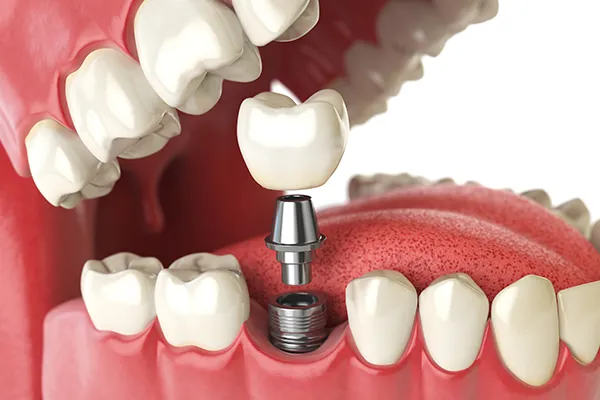 A single tooth implant from Premier Dental Center replaces one missing tooth at our offices in Bells, Jackson, Milan, or Lexington, TN, without involving the healthy teeth on either side of the gap. A single tooth implant from Premier Dental Center replaces one missing tooth at our offices in Bells, Jackson, Milan, or Lexington, TN, without involving the healthy teeth on either side of the gap.
An implant is a small titanium post that we place into the jawbone where your natural root used to be, topped with a custom crown that matches the look and bite of the teeth around it. When you eat, talk, and smile, the result comes closer to a natural tooth than the other replacement options.
Losing one tooth feels minor at first, especially if it is toward the back of the mouth. A few months in, the surrounding teeth can start to drift, the opposite tooth begins to grow toward the gap, and the bone where the root used to be starts to shrink. A single tooth implant is the option most likely to stop that chain of changes before it reshapes the rest of your bite.
This page focuses on replacing one missing tooth. Our main page on dental implants covers how implant treatment works across the full range of cases, while here we stay on the single-tooth scenario and how it compares with the other tooth replacement options we offer. If you are weighing an implant against a bridge specifically, our Dental Bridges vs Implants page makes that comparison in detail.
On This Page
What Is a Single Tooth Implant?
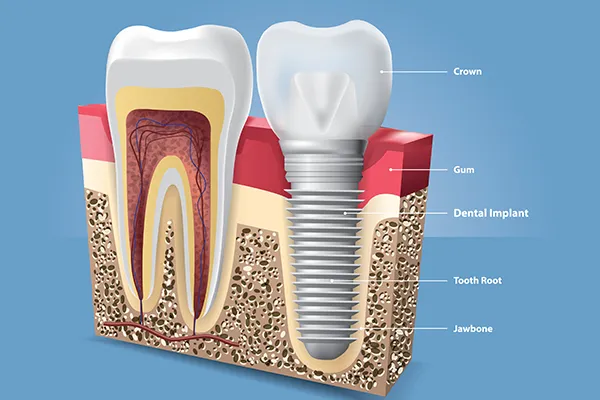 A single tooth implant has three parts. The implant itself is a small, screw-shaped titanium post that takes the place of the missing root. An abutment connects to the top of the post once the bone has healed around it. A custom-made dental crown then attaches to the abutment, shaped to match the size, color, and bite of your other teeth. We provide single tooth implant treatment across our four West Tennessee offices in Bells, Jackson, Milan, and Lexington. A single tooth implant has three parts. The implant itself is a small, screw-shaped titanium post that takes the place of the missing root. An abutment connects to the top of the post once the bone has healed around it. A custom-made dental crown then attaches to the abutment, shaped to match the size, color, and bite of your other teeth. We provide single tooth implant treatment across our four West Tennessee offices in Bells, Jackson, Milan, and Lexington.
The titanium post integrates with the jawbone over several months in a process called osseointegration. That fused connection is why implants feel stable when you bite into harder foods and why they last so much longer than non-implant alternatives.
Am I a Candidate for a Single Tooth Implant?
Most adults who are in reasonable general health are candidates. The main considerations are bone volume at the implant site, gum health, and any medical conditions or medications that affect healing. We use 3D imaging at the consultation to map exactly how much bone is available and where the nerves and sinuses sit relative to the planned implant. Our 3D CBCT Imaging for Dental Implants page covers how that scan works.
Patients who have been missing a tooth for years sometimes need bone grafting before the implant goes in, since bone resorbs when no root is stimulating it. We can usually tell at the consultation whether a graft is part of the plan and what that adds to the timeline.
Single Tooth Implant vs. Other Replacement Options
The two non-implant options for a single missing tooth are a dental bridge and a removable partial denture. A bridge spans the gap by anchoring a fake tooth to the natural teeth on either side, which means those neighboring teeth have to be shaped down to support it. A partial denture clips into place but moves slightly during eating and does not preserve the bone underneath. An implant leaves the neighboring teeth alone, holds bone in place where the root used to be, and replaces both the root and the crown rather than just the visible tooth. Whether an implant or a bridge fits your case better often comes down to the health of the surrounding teeth and your timeline.
Your Implant Dentist
Dr. Chris Arnold has completed nearly 400 hours of implant-focused continuing education through the Implant MAXI Course at Georgia Health Sciences University, and he is a member of the American Academy of Implant Dentistry – more on his background is on Dr. Arnold's bio page. He places single tooth implants for patients across our four West Tennessee offices, from straightforward replacements to cases that need grafting or coordination with other treatment.
Our doctors have been part of the Bells, Jackson, Milan, and Lexington communities since 1979, and implant care is one of the areas where the depth of that experience really shows. The plan you receive at your consultation reflects what we have learned from the patients we have treated – not a textbook ideal, but what actually works for a tooth in your part of the mouth, with your bite and your bone.
The Single Tooth Implant Process
Most single tooth implant cases take four to eight months from the first consultation to the final crown. The timeline depends on bone healing, whether grafting is part of the plan, and how quickly your jaw integrates with the implant post.
1. Consultation and 3D Imaging
We start with an exam and a 3D CBCT scan to see exactly how much bone is at the implant site and how it relates to nearby nerves, roots, and sinuses. The scan gives us the information we need to plan the implant placement precisely before surgery day.
2. Tooth Extraction or Site Preparation, If Needed
If the tooth is still in place, we may need to remove it with a tooth extraction first. If the site needs additional bone before we place the implant, we graft the area and allow several months for healing. Some cases allow for immediate implant placement at the time of extraction; we will tell you at the consultation which path fits your situation.
3. Implant Placement
Implant placement is a same-day in-office procedure. We numb the area, make a small opening in the gum, and place the titanium post into the prepared site in the jawbone. Many patients are surprised at how short and how comfortable the appointment is, often shorter than the extraction of the tooth being replaced.
4. Osseointegration
Over the next three to six months, the bone fuses to the implant post. This is the slowest phase of the process, and there is not much for you to do during it beyond keeping the area clean. We will see you for a brief check during this window to confirm the implant is integrating well.
5. Abutment and Final Crown
Once the implant is fully integrated, we attach the abutment and take impressions for your final crown. The crown is custom-made to match the shape, shade, and bite of your other teeth. When it is seated, the implant restoration is complete, and you use it just as you would a natural tooth.
Benefits of a Single Tooth Implant
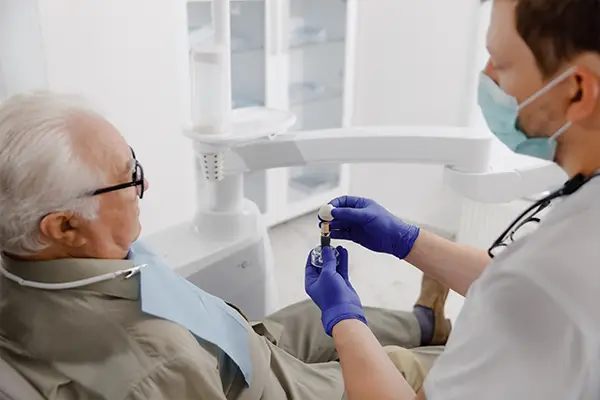 A single tooth implant addresses both the visible gap and the changes happening below the gumline after one tooth is lost. If you are missing several teeth, implant-supported dentures may be the better fit, and the broader case for implants lives on our Benefits of Dental Implants page. This section stays on what the single-tooth case specifically gives you. A single tooth implant addresses both the visible gap and the changes happening below the gumline after one tooth is lost. If you are missing several teeth, implant-supported dentures may be the better fit, and the broader case for implants lives on our Benefits of Dental Implants page. This section stays on what the single-tooth case specifically gives you.
Preserves the Bone Where the Root Used to Be
When a tooth is missing, the bone that held its root begins to resorb within months. The implant post takes over the root's job of stimulating that bone, which is exactly why we map your bone volume with a 3D CBCT scan before placement, so the implant sits where it can do that work and hold the surrounding contour.
Leaves the Neighboring Teeth Untouched
A bridge requires shaping down the healthy teeth on either side of the gap to anchor it. A single tooth implant stands on its own in the bone, so those neighbors keep their full structure. Weighing whether those teeth are better left alone is part of the honest candidacy conversation we have with you at the consultation.
Functions Like the Tooth It Replaces
An implant fuses to the bone, which gives you a stable anchor for biting into an apple or chewing tougher foods without the movement you get from a removable option. The crown we place on top is shaped to your bite specifically, and we confirm and adjust that bite at the seating appointment before you leave.
Built to Last Decades
With good home care and regular cleanings, the implant post often lasts the rest of your life; the crown on top may need replacing after fifteen to twenty years of normal use. Keeping those cleanings on schedule at any of our four offices is the single biggest thing you can do to make it last.
Why Choose Our Practice
A single tooth implant is a months-long process with several visits, so where you have it done matters. We have placed implants across our Bells, Jackson, Milan, and Lexington offices since 1979, and we keep one shared record across all four. If your placement is in Jackson but a follow-up during the healing months is easier in Milan, your scans, plan, and progress notes are already there.
Our implant care is backed by membership in the American Academy of Implant Dentistry and the advanced implant training behind it. Just as important to most patients is that we will tell you the truth about candidacy. If a bridge is the better choice for your situation, or if your bone needs grafting before an implant is realistic, we will say so and explain the timeline rather than pushing you toward a placement date that does not give your case its best chance.
Single Tooth Implant Cost
The cost of a single tooth implant depends on a few specific factors: whether a tooth extraction is part of the plan, whether the site needs bone grafting, the type of crown that goes on top, and any sedation preferences. We walk through all of those numbers at the consultation, before any work is scheduled, so you know what the full case will look like before you commit.
Dental insurance coverage for implants varies more than coverage for other procedures. Some plans cover the implant placement, some cover only the crown, and some treat the procedure as not covered at all. Our front-desk team verifies your specific benefits and explains what your plan will and will not contribute. Our insurance and financing options include third-party plans through Cherry, Sunbit, and CareCredit, which can spread the cost over time.
If you are weighing the implant against another replacement option for budget reasons, ask us to put both estimates side by side at the consultation. The difference in long-term cost is often smaller than it looks at the initial quote, once you account for the lifespan of each option and any future maintenance.
Schedule Your Consultation
A single tooth implant consultation includes a 3D CBCT scan, an exam, and a clear plan for your case before you commit to anything. Call us at 731-300-3000 or schedule an appointment online to set it up. We will see you at any of our four West Tennessee offices. Our Jackson location is at 80 Exeter Rd, Jackson, TN 38305. Addresses and hours for the Bells, Milan, and Lexington offices are on our Locations page.
Frequently Asked Questions
How long does the whole single tooth implant process take?
From the first consultation to the final crown, plan on four to eight months. If your case needs bone grafting first, add another three to six months for that healing window. Same-day cases, where the implant goes in at the time of extraction, can shorten the front end of the timeline for patients who qualify.
Is the implant placement painful?
Most patients say the surgical visit is more comfortable than they expected, often easier than the extraction of the tooth being replaced. We numb the area thoroughly, and over-the-counter pain relievers usually handle any soreness in the day or two afterward. For patients with high anxiety or more complex cases, we can discuss sedation options at the consultation.
How long do single tooth implants last?
The titanium post is engineered to last; with good home care, it commonly stays in place for the rest of your life. The crown on top behaves more like any other crown and may need replacement after fifteen to twenty years of normal use. What ages out first is usually the porcelain crown, not the implant connection underneath.
Will the implant crown look like my other teeth?
Yes. We design the crown to match the shade, shape, and translucency of your surrounding teeth, and most patients cannot pick out their implant in a photo of their smile. If the implant is in a visible position, we take extra care with the gum contour around the abutment, since that gum line is part of what makes the result look natural.
Does insurance cover a single tooth implant?
Coverage varies by plan more than it does for other procedures. Some plans pay toward both the implant placement and the crown, some pay only the crown, and some treat implants as not eligible. If your plan covers implants, the procedure usually falls under major services, which carry waiting periods and annual maximums that affect how much your plan pays in any one year. We verify your insurance and financing benefits before treatment so the breakdown is in writing before any work starts.
What if I do not have enough bone for an implant?
A bone graft can build up the site before the implant goes in. Grafting is a routine part of implant dentistry, and the 3D CBCT scan we take at the consultation usually tells us right away whether your case needs it. The graft adds several months to the overall timeline but generally does not change what is possible for your case in the end.
What is the main difference between an implant and a bridge?
A bridge anchors a fake tooth to the natural teeth on either side of the gap, which means those teeth need to be shaped down to hold it. A single tooth implant replaces the missing root and crown without involving the neighbors, and it preserves the bone where the root used to be, which a bridge does not. The practical difference is timeline: a bridge is usually finished in a few weeks, while an implant takes several months because the bone needs to fuse with the post. The Dental Bridges vs Implants page walks through how to weigh those tradeoffs.
What happens if a dental implant fails?
Implant failure is uncommon when the case is planned well, home care is good, and there are no underlying health factors working against integration. When it does happen, the implant either does not fuse with the bone during healing or loosens later. In most cases, we can remove the implant, allow the area to heal, and place a new one. We go over the small risks involved at the consultation so nothing comes as a surprise. |