Surgical Tooth Extractions
Surgical Tooth Extractions provided by Our Expert Dentists
in Bells, Jackson, Milan & Lexington, TN at Premier Dental Center
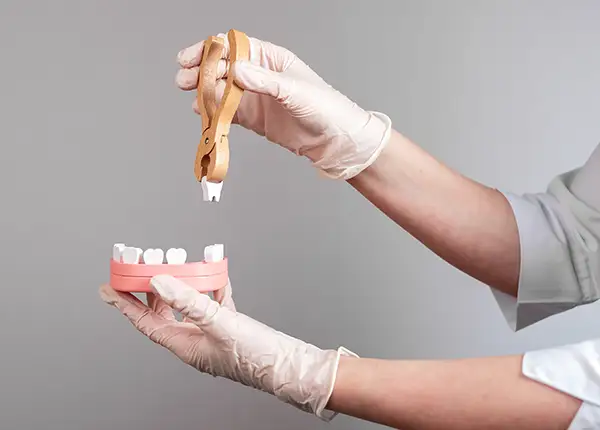 If you need a surgical tooth extraction in Bells, Jackson, Milan, or Lexington, TN, Premier Dental Center handles complex removals in-house, with sedation options to keep you comfortable. Not every tooth comes out easily. When one is broken at the gumline, badly decayed, or sitting below the surface, removing it safely takes a surgical approach, and our doctors do that work right here. If you need a surgical tooth extraction in Bells, Jackson, Milan, or Lexington, TN, Premier Dental Center handles complex removals in-house, with sedation options to keep you comfortable. Not every tooth comes out easily. When one is broken at the gumline, badly decayed, or sitting below the surface, removing it safely takes a surgical approach, and our doctors do that work right here.
Unlike a simple tooth extraction, where the tooth is loosened and lifted out whole, a surgical extraction may involve a small incision in the gum or removing the tooth in sections. It sounds more involved, and it is, but it’s a controlled, everyday procedure for our team.
We’ve cared for West Tennessee families since 1979, so chances are we already know your history. There’s no separate referral across town. We plan the extraction, keep you comfortable, and talk through replacing the tooth, all in one place.
On This Page
What Makes an Extraction Surgical
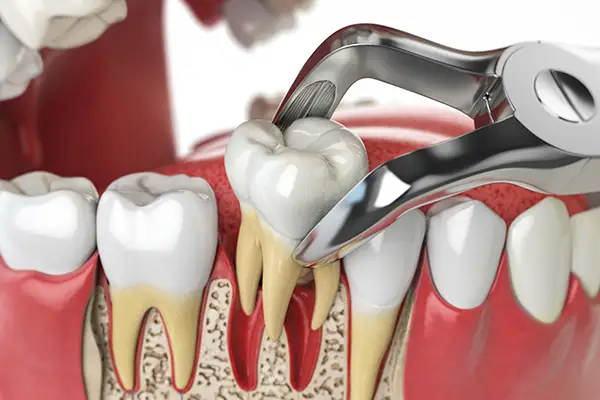 A simple extraction removes a tooth that’s fully visible above the gum and can be loosened and lifted out in one piece. A surgical extraction is for everything more complicated than that, and the difference is mostly about access. A simple extraction removes a tooth that’s fully visible above the gum and can be loosened and lifted out in one piece. A surgical extraction is for everything more complicated than that, and the difference is mostly about access.
When a tooth is broken off at the gumline, hasn’t fully come in, or has roots that curve or grip the bone, there’s nothing easy to grab onto. A surgical approach gives the dentist a way to reach the tooth, sometimes through a small gum incision or by dividing it into pieces, and remove it without straining the surrounding bone and teeth.
This is also the safer route when a tooth is fragile. Forcing a brittle or decayed tooth risks breaking it further, so removing it in a planned, sectioned way is often gentler in the end.
When a Surgical Extraction Is Needed
Most teeth never need surgical removal. When they do, it’s usually for one of a few reasons:
- A tooth broken at the gumline – Trauma or heavy decay can snap a tooth off, leaving roots that have to be removed surgically.
- Severe decay or infection – When a tooth is too damaged to save with a root canal, removing it protects the teeth and bone around it.
- Loose teeth from gum disease – Advanced periodontal disease can loosen teeth to the point that removal is the healthiest option.
- Teeth that haven’t fully erupted – A tooth sitting partly or fully below the gum needs a surgical approach to reach it.
If you’re dealing with a painful or broken tooth right now, don’t wait it out. The sooner we see it, the more options we usually have.
Staying Comfortable During Your Extraction
The biggest worry most people bring to a surgical extraction is whether it will hurt. The honest answer is that the procedure itself shouldn’t, because we numb the area fully before we begin, and we don’t start until you’re comfortable.
For patients who feel anxious, or for longer and more involved extractions, we offer sedation options that range from taking the edge off to a deeper, more relaxed state. Tell us how you’re feeling about the procedure, and we’ll match the approach to you.
What to Expect, Step by Step
 Every surgical extraction is planned around your specific tooth, but the visit generally follows the same path. Every surgical extraction is planned around your specific tooth, but the visit generally follows the same path.
Planning and imaging
First, we take digital X-rays or 3D images to see the tooth’s roots and the bone around them. That map tells us exactly how to approach the removal and helps us avoid surprises.
Numbing and sedation
Next, we numb the area thoroughly. If you’ve chosen sedation, we get you settled first, and because our team is trained in IV sedation, we can keep you as relaxed as you need right here instead of referring you out. We don’t start until you’re ready.
Removing the tooth
Then comes the extraction itself. Depending on the tooth, this may mean a small incision in the gum, removing the tooth in a few pieces, or both. You shouldn’t feel pain, only some pressure.
Healing and recovery
Afterward, we place gauze, go over aftercare, and send you home with clear instructions. Most people manage with over-the-counter pain relief and a few quiet days, and we’re a phone call away if anything comes up.
Our Experience With Surgical Extractions
Surgical extractions call for training beyond routine care, and our doctors handle them in-house rather than referring you to an outside surgeon. Our team’s continuing education includes oral surgery and complex extractions, so the dentist removing your tooth has done it many times before.
That in-house approach also means the same team manages your comfort from start to finish. We’ll plan the right level of numbing or sedation for your specific extraction, and because we’ve cared for West Tennessee families since 1979, chances are we already know your history. More about our team and approach.
Why Choose Premier Dental Center
A surgical extraction is a procedure you want in steady, experienced hands, and that’s what we’ve offered West Tennessee since 1979. We handle complex removals in-house, so you’re cared for by a team that already knows you, not a stranger across town.
Four offices in Bells, Jackson, Milan, and Lexington mean there’s a convenient location close to home, and because your records are shared across all of them, your full history is on hand wherever you’re seen. We also keep the whole arc of care under one roof, from the extraction itself to replacing the tooth, so you’re not handed off mid-treatment.
We’re upfront about cost, too. You’ll get a clear estimate before anything starts, and if you need help spreading payments out, we can walk you through dental financing options. The goal is simple: remove the problem tooth safely, keep you comfortable, and set you up for what comes next.
Replacing an Extracted Tooth
Removing a problem tooth is often only half the job. Unless it’s a tooth that doesn’t need replacing, leaving a gap can let neighboring teeth drift and the jawbone shrink over time, so we’ll talk through your options before you leave.
For many patients, a dental implant is often the longest-lasting way to replace a single tooth, since it stands on its own without affecting the teeth beside it. A dental bridge is another solid choice, and if you already have an implant in place, our guide to dental implant restoration covers fitting the crown on top. Because we handle both the extraction and the replacement in-house, the same team plans your new tooth with your history and imaging already on file, and we’ll compare tooth replacement options based on your mouth, your timeline, and your budget.
There’s no rush to decide the day of your extraction. Healing comes first, and we’ll plan replacement around it.
Getting Started
Don’t put off a tooth that’s causing trouble. Call us at 731-300-3000 to talk through a surgical extraction, or schedule an appointment online. Our Jackson office is at 80 Exeter Rd, Jackson, TN 38305. We also serve Bells, Milan, and Lexington. Find the office nearest you among our office locations.
Frequently Asked Questions
How long does it take to recover from a surgical extraction?
Most of the soreness and swelling eases within three to four days, and the gum tissue typically closes over in a couple of weeks. The bone underneath keeps filling in for a few months, which matters mainly if you’re planning to replace the tooth. We’ll give you a timeline specific to your extraction so you know what’s normal at each stage.
What is dry socket, and how do I lower my risk?
Dry socket happens when the blood clot that forms in the socket is dislodged too early, leaving the bone exposed and tender. You can lower your risk by avoiding straws, smoking, and vigorous rinsing for the first few days, and by following the aftercare steps we send home with you. If a throbbing ache shows up a few days after the extraction, call us, it’s easily treated.
Will I be put to sleep for the procedure?
Not necessarily. Many surgical extractions are done with local anesthetic alone, so you’re awake but completely numb. For patients who want more, we offer sedation up to IV sedation, which leaves you deeply relaxed and remembering little of the visit. We’ll recommend a level based on the complexity of the extraction and how you feel about it.
Can I eat normally afterward?
Plan on soft foods for the first day or two, things like yogurt, soup, eggs, and smoothies eaten with a spoon. Avoid anything crunchy, chewy, or very hot near the site, and keep food away from that side of your mouth while it heals. Most people are back to a normal diet within about a week.
How soon can I replace the tooth after it heals?
A bridge or denture can often move ahead once the gum has settled, while a dental implant usually waits a few months for the bone to fill in and stabilize. We’ll map out the timing at your extraction so you can plan around it rather than guess.
Is it ever better to save the tooth instead of removing it?
Often, yes, and we’ll always look at that first. A tooth with deep decay or infection can sometimes be kept with a root canal and a crown rather than removed. Extraction makes sense when a tooth is too broken, loose, or infected to restore predictably. We’ll give you the honest trade-offs so you can decide with us.
What should I do if a tooth breaks off at the gumline before my visit?
Call us as soon as you can so we can get you in. In the meantime, rinse gently with warm salt water, use a cold compress for swelling, and take over-the-counter pain relief as directed. Try not to poke at the area. The remaining roots usually need a surgical extraction, which we can plan once we see it. |